
an Interview with Artist Lohitha Kethu (Visual Poetry Workshop @ RestFest Film Festival 2026)
Meet artist Lohitha Kethu and learn about their virtual workshop in the 2026 RestFest Film Festival program.

The 2026 Festival begins in just over 2 weeks! Click here to learn more about how to stream the films & join our virtual events. :)
As part of the upcoming 2026 RestFest Film Festival, artist Lohitha Kethu will be facilitating Visual poetry: multidimensional technologies for expression and access. A virtual workshop on Sunday, February 8.
Read on for an interview with Lohitha. Learn about what visual poetry means to them, about being part of Crip community, and their background in the arts.
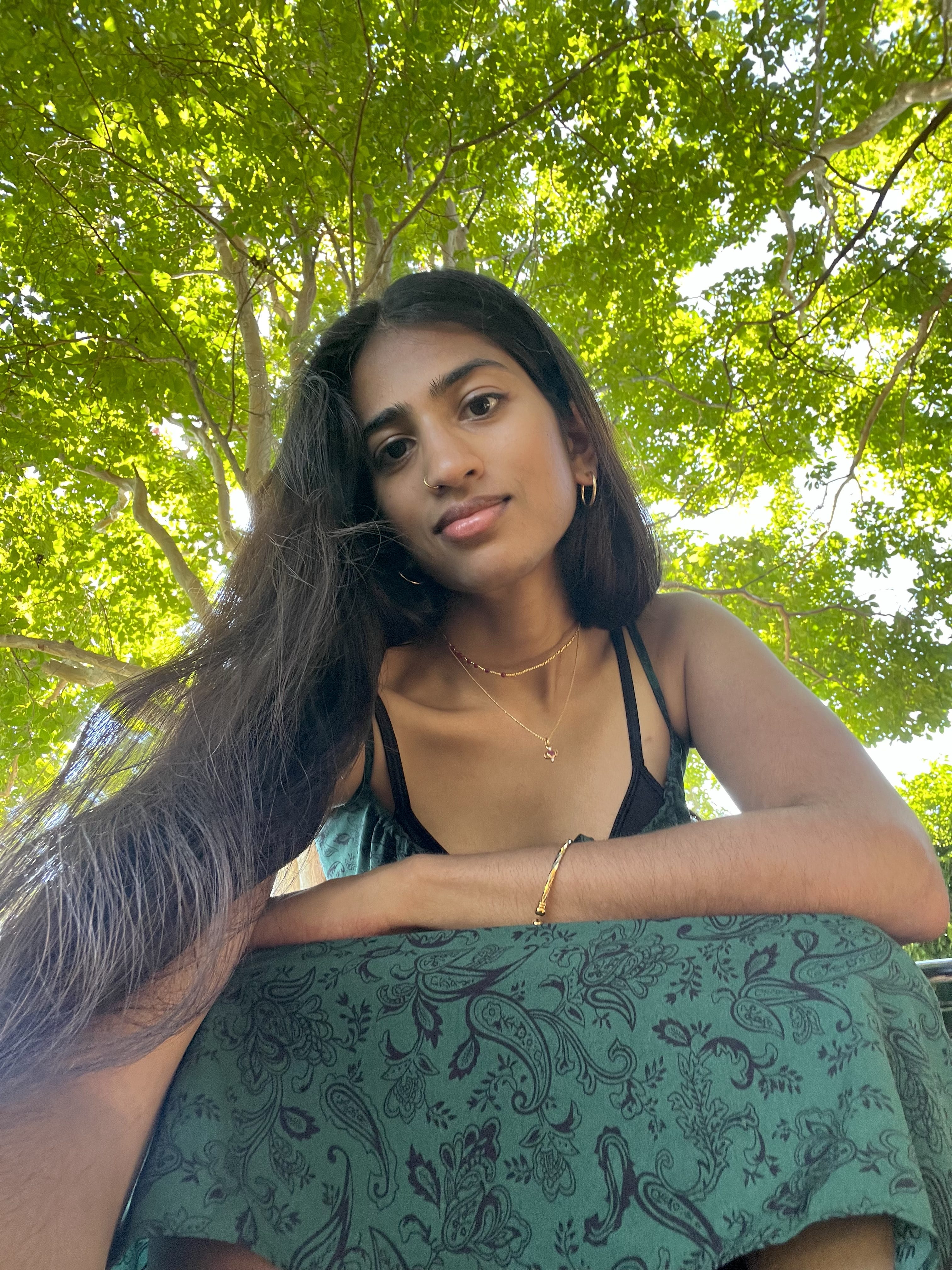
Meet Lohitha
What sparked your interest in visual poetry?
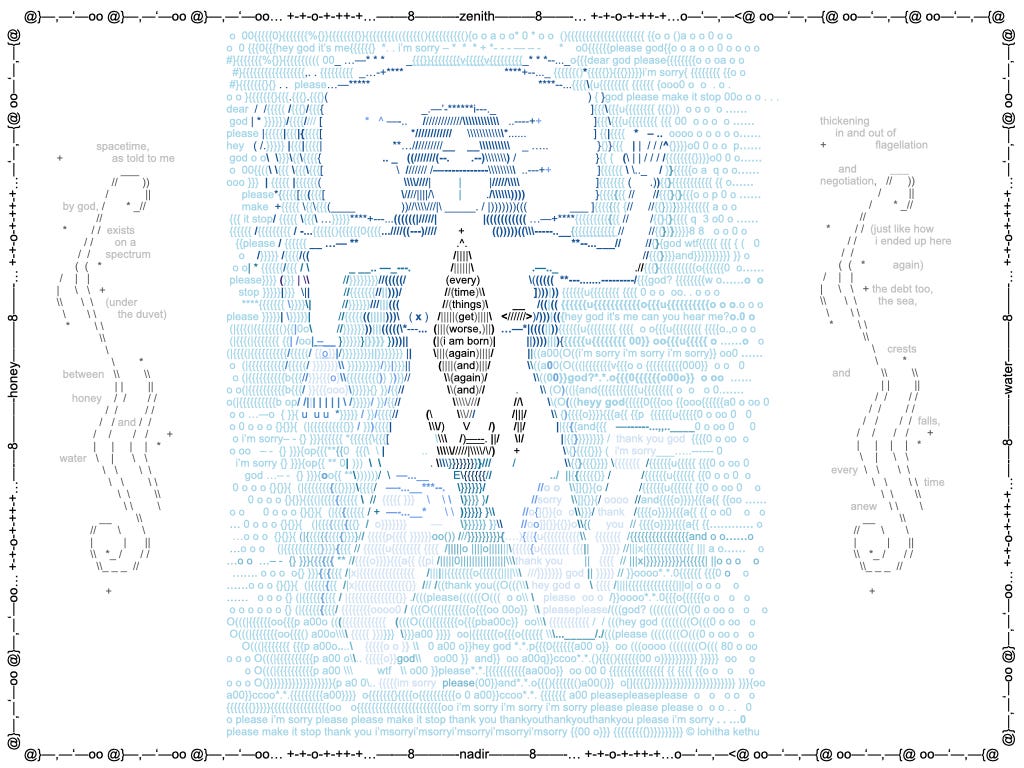
I started making visual poetry by accident and out of necessity to witness myself in a more accessible way than my usual art forms. Last year, I spent long periods of time mostly bedbound and more incapacitated than I had ever been since childhood. I thought I was dying and I was so confused and lost for answers and I was grieving, in so much pain, and felt so isolated. I was having these life and death negotiations with g*d in my bed and bathtub, the two of which I kept having these visions of being like dimensions or axes by which to plot the psychic coordinates of one’s deteriorating self. I wanted to make these huge paintings–I had been drawing all of my life and that is a huge part of my job as a medical artist so I was also grappling with possibly losing the ability to draw and the identity loss that comes with bodily decline. I was desperate to make meaning of what was happening to me but writing in coherent essay form was too much and drawing was also too much for me. I realized I could work with the very low energy I had–to press keys on my laptop in shifts, while laying on my side–to type images and “coded” poetic compositions in the ASCII style (American Standard Code for Information Exchange). Since then, I taught myself more about visual poetry and read more. I think life is constant renegotiation, especially for queer and trans sick, mad, crip, disabled people. It is so painful for decline and access to have to shape your survival and creative practice, but sometimes you stumble into something really cool and exciting enough to feel alive again.
What does visual poetry mean to you?
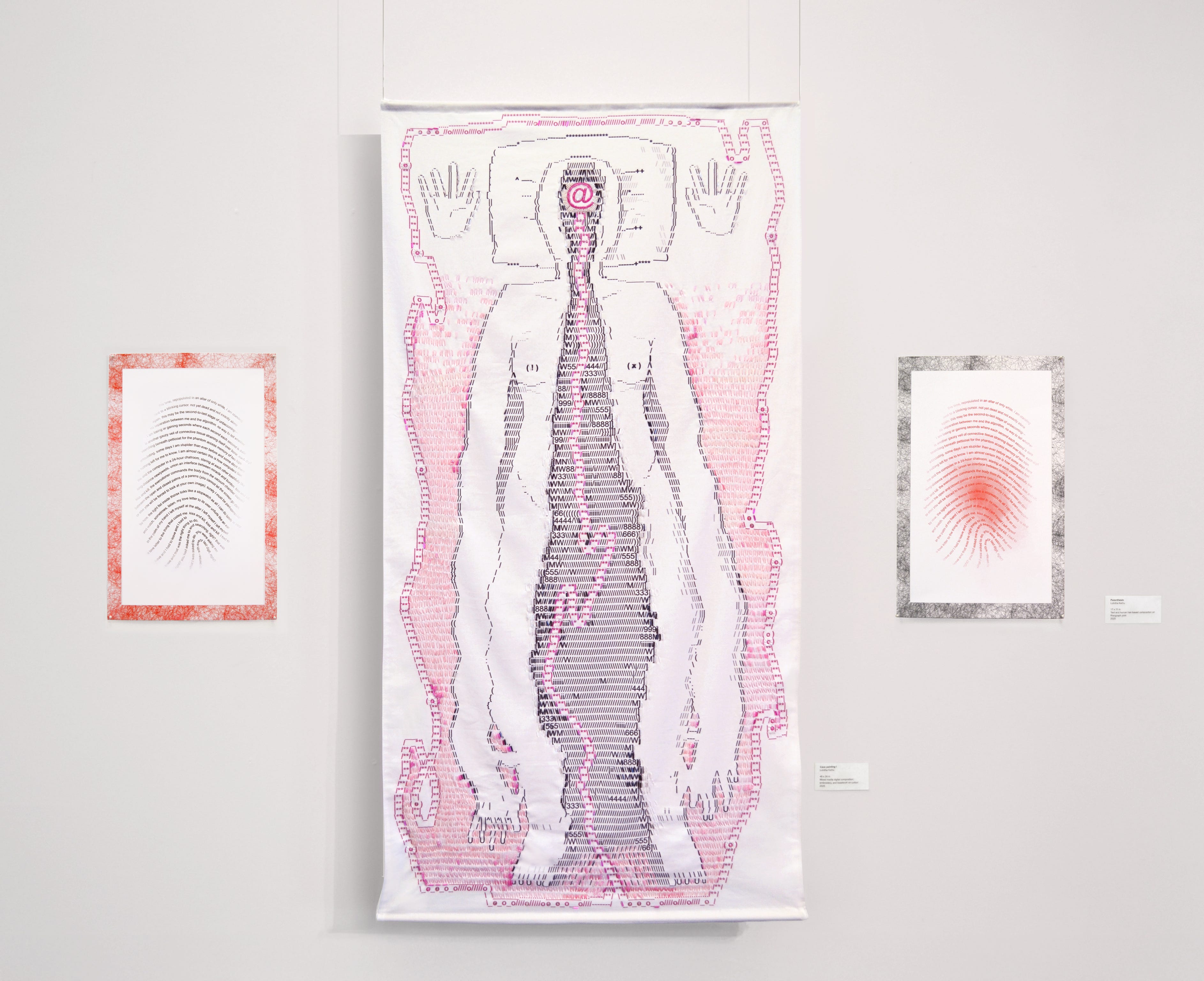
I’ve since been creating visual poetry in multimedia formats including audio, textile and fiber art, print-making, and collage, but I love seeing it as a way to expand access to the experience of art or poetry. Working in visual poetic forms allowed me to deconstruct and feel more free from traditional form or linear ways of reading, for example, creating poetry that has no defined beginning or end, such that whoever is reading can approach the work however and wherever they would like. Access means different things to everyone though, and the above example may feel freeing for one person but frustrating for another. I also really want to underscore that “visual” poetry also is also not solely visual and there are so many beautiful examples of multisensory (audio, touch, smell) based poetics, where meaning is enriched, not lost, between modalities.
I am no expert by any means and I am still experimenting, but I think it can also be a really interesting way to think about poetic archiving. Your Notes App speech-to-text poetry dictated on the floor being unable to move, the blood spots you make patterns on a tissue with after checking your blood sugar–all feel poetic in a way that is incapable of defining genre or form because they are created of the moment. A living archive!
What does being part of a Disabled/Crip arts community mean to you?
Witnessing the creativity of my disabled friends and larger communities is a beautiful, hard, life-giving thing that has impacted me in more ways than I can understand. I share with others the sentiment that being part of collective navigation of disability is a way of future-making and reimagining what it means to live interdependently and not just survive. Many fruitful lessons in unlearning and learning and navigating conflicting needs and the imagination it takes to figure it out. One realization I came to while raging a fever in the bathtub was that true creativity transcends art or what is concretely audiovisual or material. Creativity might be about how we live and make meaning, and I am so lucky to see and know this of all of my disabled friends and creatives. We are so, so alive.
What is your arts background?
I am a multimedia and medical artist and writer. Medical art refers to drawing, painting, animation, UI/UX, AR/VR and 3D modeling of didactic quality created for patient and expert (doctors, surgeons, researchers) audiences. I was inspired to get into medical art out of a long-time love of visual narrative, science, and a desire to make my own mortality-altering childhood illnesses feel less isolating. I’ve illustrated hundreds of journal articles and several health literacy books and zines that center patient narratives. My medical art background lends a visual vocabulary to my creative practice which is grounded in body horror, South Asian religious and medical iconography, semiotics, and poetry. I am especially interested in the body in terms of technological, historical, queer, trans, and metaphysical myth-making and world-building and would love to chat more if that resonates with anyone else.
about the workshop: Visual poetry: multidimensional technologies for expression and access
As body-minds that operate in our own timelines and sensory dimensions, we are constantly asked to translate or define ourselves by language (symbols, text, technology) that may not yet exist.
In response to this liminality and isolation, how are we co-creating new aesthetic meaning? How can visual poetry–shaped by inaccessibility–expand access and facilitate connection in a culture that disembodies artist from audience?
In this virtual workshop,
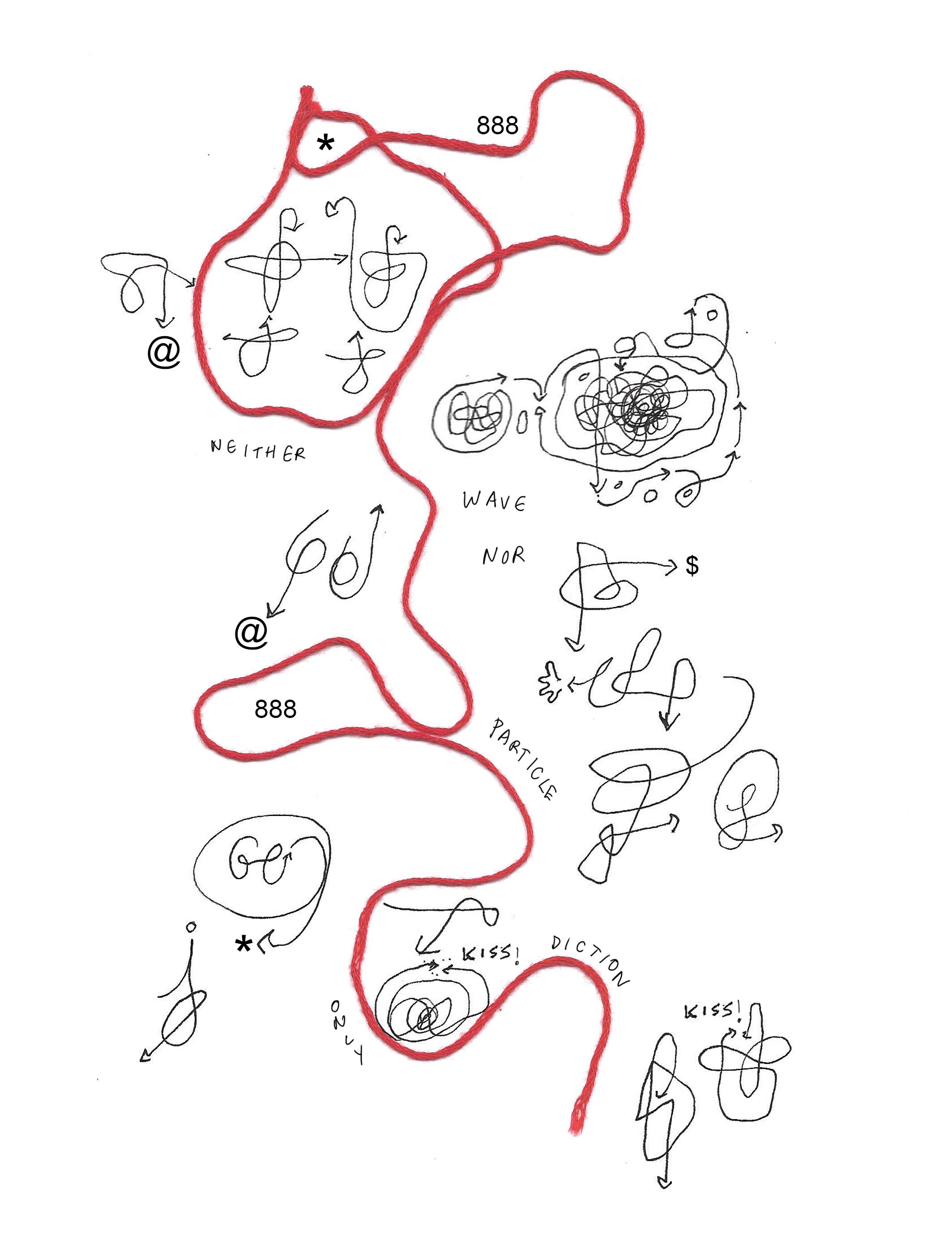
We will explore the semiotic landscape of visual poetry as a tool for trans, crip expression; from ancient petroglyphs to contemporary computational poetry.
We will look at techniques, devices, and a variety of multimodal poetry by disabled, queer, and/or trans artists.
We will also discuss disability as method and share creative resources and tools.
Participants will work with generative prompts to create their own visual poems and, if desired, share with the group.
Artist Bio:
Lohitha (they/ them) is a multiply disabled, covid-realist medical and multimedia artist and writer. They've illustrated health literacy books, exhibited artwork across the US, and have work featured in Women's Studies Quarterly, The New River Journal of Electronic Literature and Digital Art, GARLAND, and more. Their creative practice explores the body beyond the visceral as a web of desires, offerings, and connections. Currently, their interests include body horror, prehistoric art, surgery, embroidery, and code. Their work can be experienced at lohithakethu.com.
one of my fave people <3
Powerful and moving!